Radiology
CT-Guided Procedures: Minimally Invasive Diagnosis and Treatment at Intelirad, Noida
Modern medical imaging has transformed the way many diseases are diagnosed and treated. Among the important advances in this field is CT-guided intervention, a technique that allows specialists to access specific areas inside the body using real-time imaging guidance.
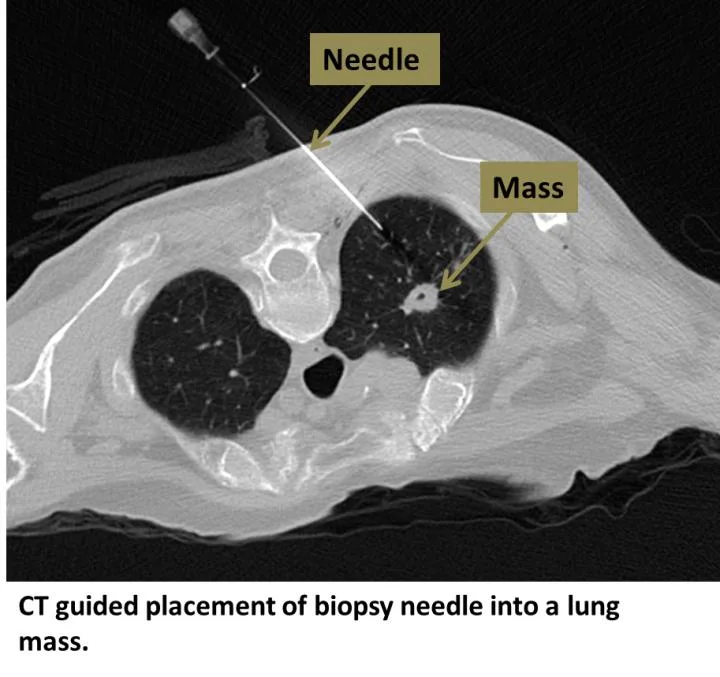
CT-guided procedures combine the precision of computed tomography (CT) with minimally invasive techniques. They can help obtain tissue samples, investigate suspicious lesions and, in selected cases, deliver targeted treatment without the need for conventional open surgery.
At Intelirad Diagnostics & Interventions, Sector 66, Noida, diagnostic imaging and specialist-led interventional radiology assessment come together to support patients requiring advanced image-guided care.
What Are CT-Guided Procedures?
CT-guided procedures are minimally invasive medical interventions performed using computed tomography images to guide a needle or other specialised instrument towards a specific location inside the body.
A CT scanner produces detailed cross-sectional images, helping the interventional radiologist identify the target, plan a safe access route and monitor instrument positioning during the procedure.
This is particularly useful when the target is deep inside the body or cannot be accessed easily using conventional examination or ultrasound guidance.
Depending on the clinical indication, CT guidance may be used for diagnostic sampling, fluid aspiration, drainage and selected therapeutic interventions.
Common Types of CT-Guided Procedures
1. CT-Guided Biopsy
A CT-guided biopsy is performed to obtain a small tissue sample from an abnormal area for laboratory examination.
It may be recommended when imaging reveals a suspicious lesion that requires further evaluation.
Common applications include:
- Lung biopsy: Sampling of selected lung nodules or masses.
- Liver biopsy: Obtaining tissue from focal liver lesions.
- Bone biopsy: Investigating suspicious bone lesions.
- Abdominal mass biopsy: Sampling selected abdominal or retroperitoneal masses.
- Deep-seated lesion biopsy: Obtaining tissue from lesions that are difficult to access using ultrasound guidance.
The tissue sample is sent for histopathological examination to help establish the diagnosis.
2. CT-Guided Fine Needle Aspiration (FNAC)
Fine Needle Aspiration Cytology (FNAC) involves using a thin needle to obtain cells from a suspicious lesion.
CT guidance can be particularly helpful when the target is deep-seated or not clearly accessible using ultrasound.
The collected material is examined by a cytopathologist to identify abnormal or suspicious cells.
3. CT-Guided Aspiration
CT-guided aspiration involves inserting a needle into a selected fluid-containing collection to remove fluid for diagnostic testing or symptom relief.
Depending on the location and clinical indication, aspiration may be considered for selected collections within the chest, abdomen or other regions.
4. CT-Guided Drainage
In selected patients, CT guidance can help place a drainage catheter into an abnormal fluid collection or abscess.
The catheter allows fluid to drain over a period of time and may help avoid more invasive surgical drainage in suitable cases.
The decision depends on the size, location, nature of the collection and the patient's overall clinical condition.
5. Image-Guided Pain Interventions
Imaging guidance is also used in selected interventional pain procedures to improve the accuracy of needle placement.
Depending on the condition and the appropriate imaging modality, interventions may include targeted injections, nerve blocks and other pain-management procedures.
Not every pain intervention requires CT guidance; ultrasound or fluoroscopy may be more appropriate in certain situations.
How Is a CT-Guided Biopsy Performed?
Although the exact technique varies according to the target organ and procedure, the general steps are as follows:
Step 1: Clinical Assessment
The interventional radiologist reviews the patient's medical history, previous imaging, blood investigations and referral details.
Step 2: Planning the Needle Path
CT images are obtained to identify the target lesion and determine an appropriate route that minimises the risk of injury to surrounding structures.
Step 3: Preparation and Anaesthesia
The skin is cleaned using sterile precautions. Local anaesthesia is generally administered to numb the area.
Sedation may be considered depending on the procedure and patient requirements.
Step 4: Needle Placement
The biopsy or aspiration needle is advanced towards the target under CT imaging guidance. Additional images may be obtained to confirm its position.
Step 5: Sample Collection
Tissue or fluid is collected as required. The sample is then sent for the appropriate laboratory examination.
Step 6: Post-Procedure Observation
The patient is monitored for a period determined by the type of intervention, access route and individual clinical circumstances.
Advantages of CT-Guided Procedures
CT-guided interventions offer several potential advantages when appropriately selected:
- Accurate targeting: Detailed cross-sectional imaging helps locate deep-seated lesions.
- Minimally invasive approach: Many procedures require only a small needle puncture rather than a surgical incision.
- Reduced surgical trauma: Selected conditions can be investigated or treated without conventional open surgery.
- Targeted sampling: Tissue can be obtained directly from a specific abnormal area.
- Individualised treatment planning: The procedure can be planned according to the patient's anatomy and clinical condition.
- Potentially shorter recovery: Many percutaneous interventions involve shorter recovery than comparable surgical procedures.
However, these benefits depend on the specific procedure, patient condition and clinical indication.
Is CT-Guided Biopsy Safe?
CT-guided biopsy is generally considered safe when performed by appropriately trained specialists using suitable precautions.
Like any invasive procedure, it carries certain risks.
Possible complications include:
- Bleeding at the biopsy site.
- Pain or discomfort.
- Infection.
- Injury to nearby structures.
- Pneumothorax (air around the lung) following certain lung biopsies.
The risk varies depending on the organ being sampled, the patient's medical condition and the biopsy technique.
Before proceeding, the interventional radiologist evaluates the potential benefits and risks and discusses available alternatives with the patient.
How Should You Prepare for a CT-Guided Procedure?
Preparation depends on the type of procedure and the area being examined.
Patients may be advised to:
- Bring previous CT, MRI, ultrasound scans and relevant medical reports.
- Carry recent blood investigations, particularly platelet count and coagulation profile when required.
- Inform the doctor about blood-thinning medications, including anticoagulants and antiplatelet drugs.
- Report any history of allergies, bleeding disorders or previous complications during procedures.
- Inform the medical team about pregnancy or the possibility of pregnancy.
- Follow specific fasting instructions if sedation or anaesthesia is planned.
Important: Never discontinue prescribed blood-thinning medication without instructions from the treating doctor.
What Happens After a CT-Guided Procedure?
After the intervention, the patient may be observed for a few hours or longer depending on the procedure.
Some patients can return home on the same day, while others may require hospital observation.
Following a biopsy, the collected sample is sent for histopathological or other appropriate laboratory examination.
The final report helps the treating clinician decide the next course of management.
Patients should seek immediate medical attention if they develop severe pain, persistent bleeding, breathlessness, fever or any other concerning symptoms after the procedure.
CT Scan and Interventional Radiology: How Are They Connected?
A CT scan is primarily a diagnostic imaging examination, whereas interventional radiology uses imaging to guide procedures for diagnosis or treatment.
The two disciplines are closely connected.
A diagnostic CT may identify an abnormality that requires tissue sampling or further intervention. In suitable cases, CT imaging can then be used to guide the procedure.
Learn more about CT Scan Services at Intelirad and Interventional Radiology at Intelirad.
For patients requiring specialist assessment for targeted pain procedures, visit our Pain Management service.
Why Choose Intelirad for Imaging and Interventional Assessment in Noida?
Intelirad Diagnostics & Interventions is located in Sector 66, Noida, and brings diagnostic imaging and specialist-led interventional radiology assessment under one roof.
Our approach focuses on:
- Specialist-led evaluation and procedure planning.
- CT and other diagnostic imaging facilities.
- Individualised assessment of image-guided procedures.
- Review of previous investigations before intervention.
- Patient counselling regarding preparation, benefits and potential risks.
Interventional work is led by a European Board-certified interventional radiologist.
The suitability and availability of each specific intervention are confirmed following specialist assessment.
Frequently Asked Questions
1. Is CT-guided biopsy painful?
Local anaesthesia is generally used to minimise discomfort. Patients may experience pressure or mild discomfort during the procedure. The experience varies depending on the biopsy site and technique.
2. How long does a CT-guided biopsy take?
The procedure commonly takes around 30–60 minutes, although the duration may vary depending on the target location, complexity and patient-specific factors.
3. Is hospital admission necessary after a CT-guided biopsy?
Not always. Many patients can go home after an appropriate observation period. However, some procedures require longer monitoring or hospital admission.
4. What is the difference between CT-guided biopsy and ultrasound-guided biopsy?
CT-guided biopsy uses cross-sectional X-ray imaging, whereas ultrasound-guided biopsy uses sound waves.
CT guidance may be preferred for deep-seated lesions or targets that are not adequately visible on ultrasound. The choice depends on the location and characteristics of the lesion.
5. Can CT-guided biopsy detect cancer?
A biopsy provides tissue for pathological examination. It can help determine whether a lesion is malignant, benign or represents another disease process. The final diagnosis depends on the pathology findings and clinical correlation.
6. Is CT-guided biopsy better than surgery?
These procedures serve different purposes. A CT-guided biopsy is generally less invasive and is used to obtain a tissue diagnosis. Surgery may still be necessary for definitive treatment or when a percutaneous approach is unsuitable.
7. Can all tumours be biopsied using CT guidance?
No. The feasibility of a biopsy depends on the tumour's location, size, accessibility, surrounding structures and the patient's medical condition.
Book an Interventional Radiology Consultation at Intelirad, Noida
If your doctor has advised a CT-guided biopsy, image-guided aspiration or another interventional radiology procedure, specialist assessment is an important first step.
At Intelirad Diagnostics & Interventions, Sector 66, Noida, we help patients understand their imaging findings and explore appropriate diagnostic and interventional options.
Intelirad Diagnostics & Interventions
Opposite Fire Station, Mamura, Sector 66, Noida, Uttar Pradesh 201309.
Call: 7830984444 / 9713914444
Website: https://www.intelirad.in/
All procedures are subject to specialist assessment, clinical suitability and confirmation of availability. This article is intended for general educational purposes and does not replace individual medical advice.
This article is for general educational purposes and does not replace an individual consultation or the advice of your treating clinician. Imaging and treatment decisions should be made in the context of your clinical history.
← Back to all articles